

Innovation
Engineering solutions for problems that don’t have a textbook answer.
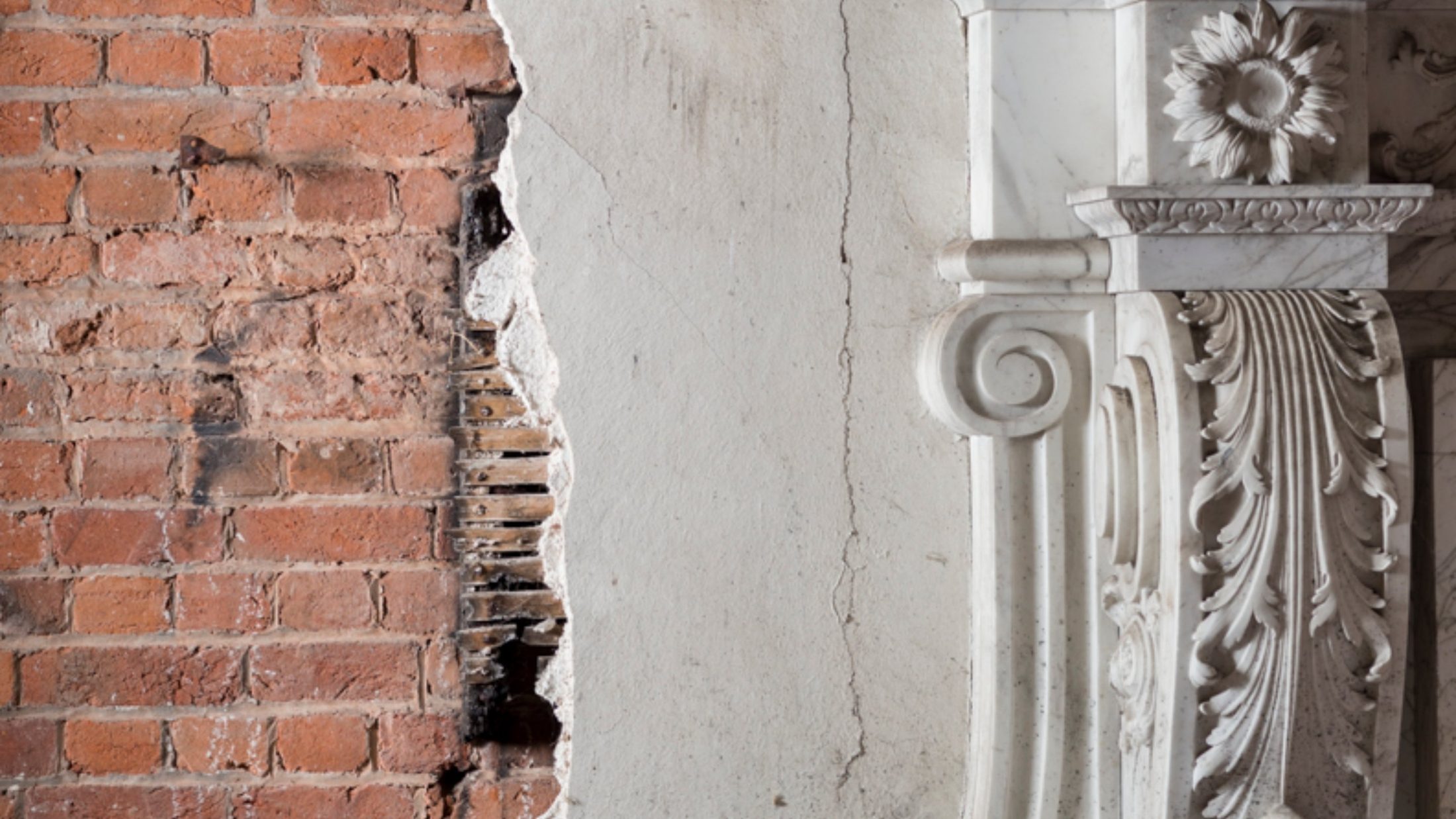
Existing and historic buildings rarely present a standard problem. Innovation, for us, isn’t a separate initiative — it’s the practical, evidence-led problem-solving that every complex heritage commission demands.
Our position
Understand more. Intervene less.
Innovation in existing buildings is about understanding the structure well enough to know where intervention is necessary — and where it isn’t.
How that shows up in our work
A few examples of the problem-solving that sits behind our project delivery.
Minimal intervention
Designing the smallest effective intervention
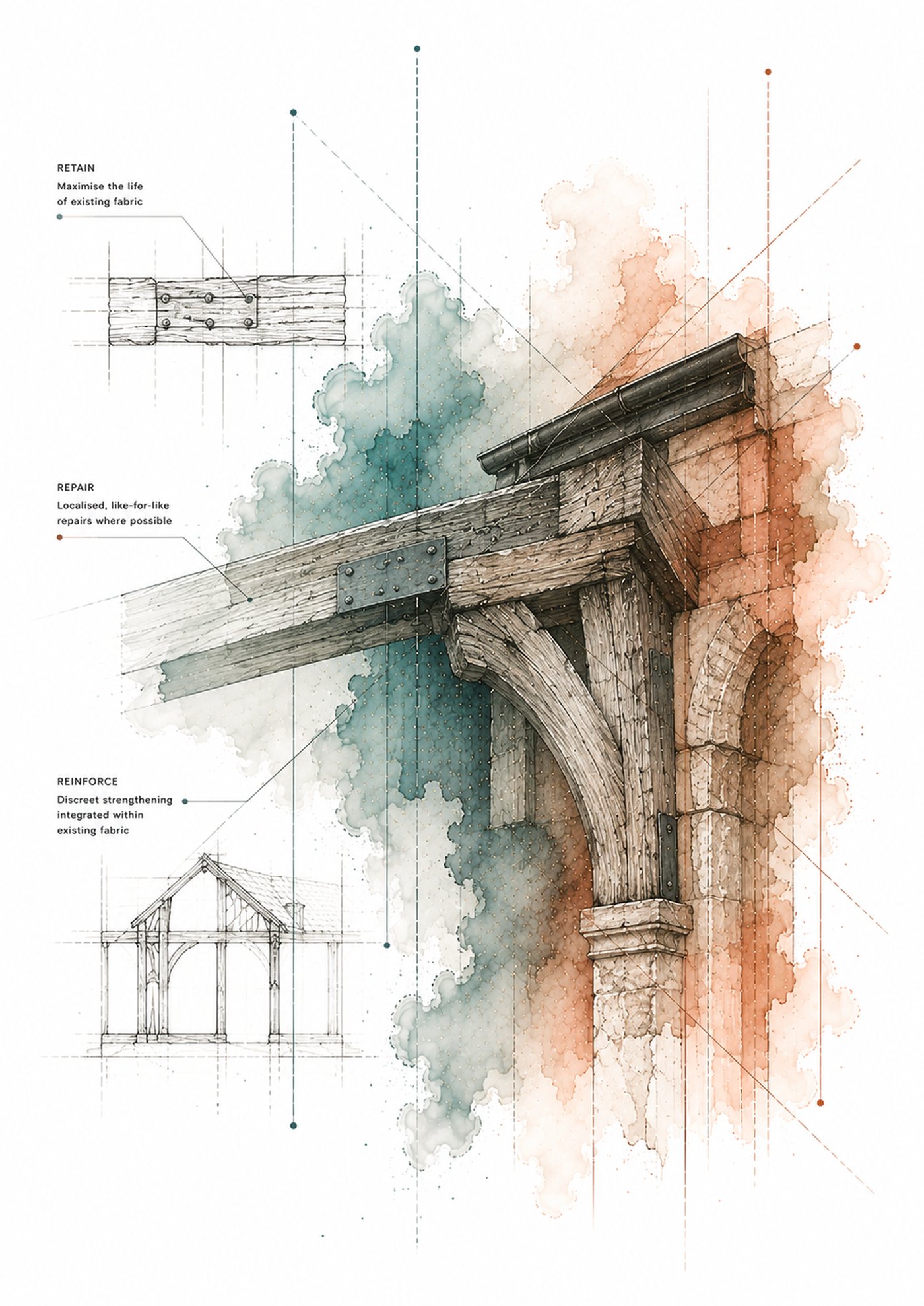
Not every structural weakness calls for a new structure. Across our conservation work we look first at whether an existing element can be retained, locally repaired or discreetly reinforced, reserving full replacement for cases where no lesser intervention will do. That discipline often produces the most inventive solution on a project — bespoke splice repairs to historic timber and ironwork, reinforcement concealed within existing fabric, and phased trial repairs that let us prove an approach before committing to it at scale.

Access engineering
Reaching what can’t be reached conventionally
Some of our most technically demanding work has nothing to do with the structure itself, and everything to do with how you safely get eyes on it. Drone photography and point-cloud laser scanning to model a large industrial guide frame without invasive access; a full internal birdcage scaffold to inspect a historic ceiling many metres above the floor below; bespoke wind engineering for sculptural installations against a scheduled ancient monument. In each case, the access strategy is as much an engineering problem as the structure being investigated.
Diagnostic methodology
Reading buildings that can’t simply be opened up
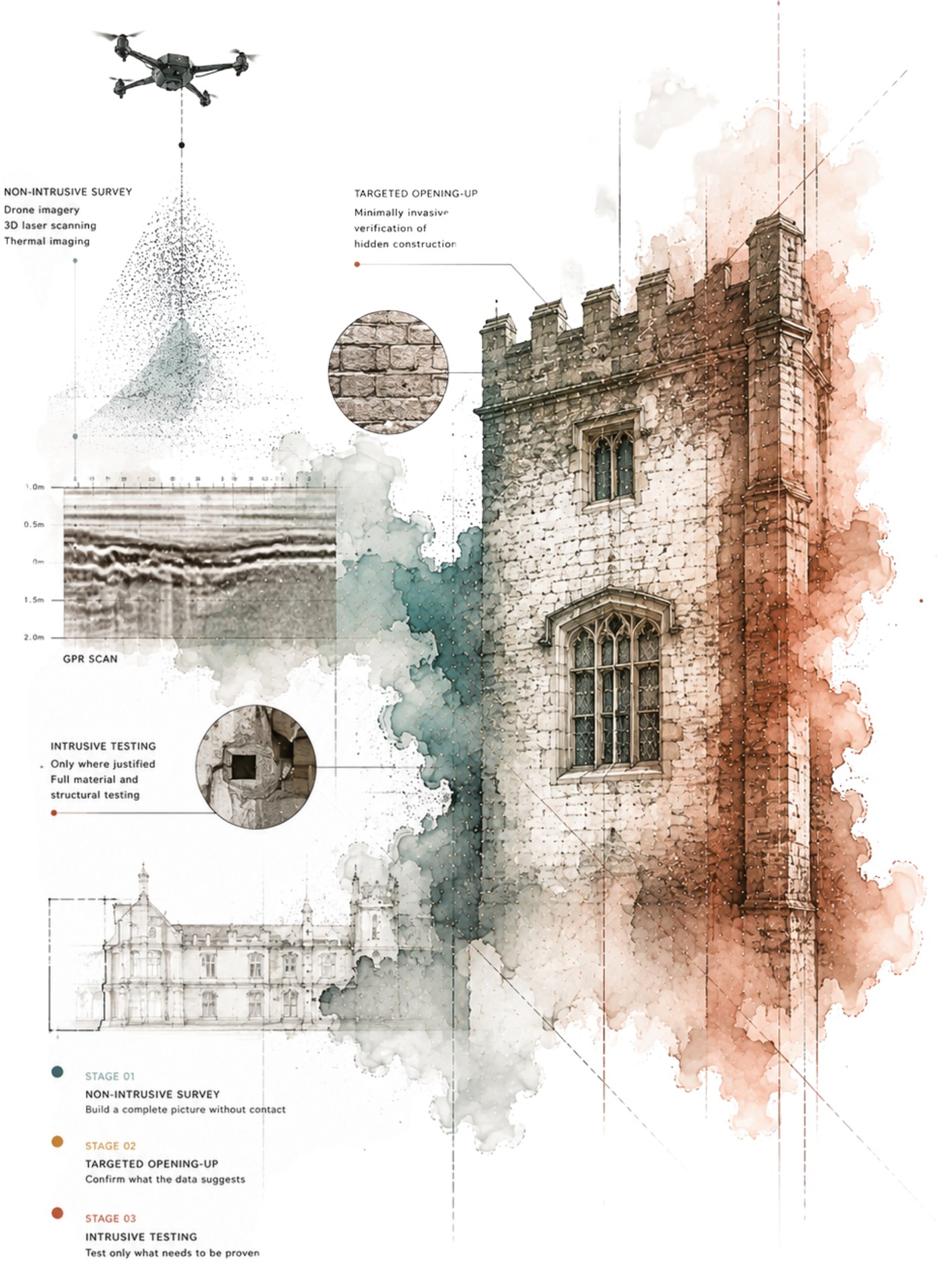
On listed and historically significant buildings, conservation principles constrain investigation as much as any other intervention. We’ve developed a staged diagnostic approach — non-intrusive survey first, targeted minimally invasive opening-up second, full intrusive testing reserved for cases that genuinely justify it — that lets us build genuine structural understanding without the wholesale disturbance a more conventional approach would require.
Complex logistics & management
Coordinating major works without closing the doors
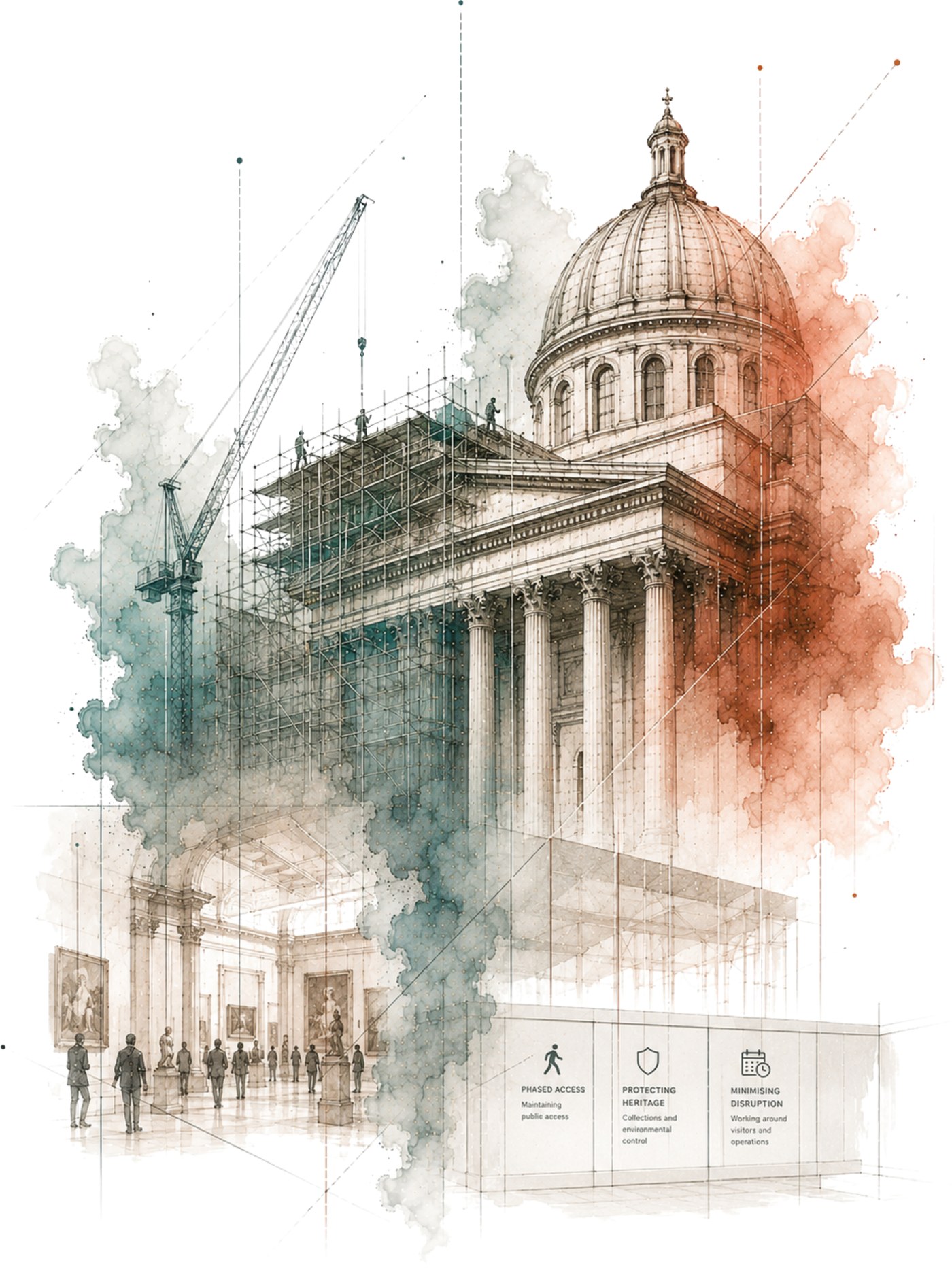
Some of our most demanding projects are logistical as much as structural. A roof fabric renewal programme at a major public cultural institution — one of the most visited buildings of its kind — has to be sequenced and delivered while the galleries beneath stay open to the public. That means phased access, careful coordination between structural works, environmental control and the venue’s own operational calendar, and a delivery strategy built around minimising disruption to visitors and collections alike, not just meeting a structural specification.
Our thinking, in depth
The problem-solving above is grounded in the same guidance and evidence base we write about. Explore our thinking on the challenges shaping existing-building and heritage engineering today.